Dysautonomia—an invisible disorder—disrupts the very basics of life: heart rate, blood pressure, digestion, breathing. It doesn’t show on the outside, but it’s always there. Quiet. Relentless.
And yet—I stand.
I show up, not because it’s easy, but because I refuse to let this condition define me. Each sunrise reminds me: as long as I keep standing tall, I am still sailing forward.
This is what Embracable Mind is about. Finding strength in the unseen. Grace in the struggle. And resilience in the storm.
Whether you live with a chronic illness, support someone who does, or are simply navigating life’s unpredictable waves—you are not alone.
Let’s embrace the mind, the journey, and the fight together.
“Studies indicate that conditions like Postural Orthostatic Tachycardia Syndrome (POTS) and Neurocardiogenic Syncope are significantly more prevalent in women. Estimates suggest that approximately 80% of individuals diagnosed with dysautonomia are female”.
Even though I am a male living with a rare form of Dysautonomia was never the path I expected life to take me down. Yet for the past four years, it has been my daily reality—a quiet, relentless battle with a condition that most people have never heard of and even fewer truly understand. I live with severe neurogenic orthostatic hypotension, a condition where standing up can cause my blood pressure to plummet, leaving me dizzy, weak, or faint. It is a disabling condition made even harder by its invisibility.
Despite a regimen of treatments—midodrine, fludrocortisone, and droxidopa—relief remains elusive. In fact, droxidopa, though rare and promising for some, caused me dangerous side effects: sudden spikes in blood pressure as high as 220, alarming weakness on the right side of my body, and other complications that forced me to stop the medication altogether. These experiences aren’t just clinical—they’re frightening, isolating, and exhausting.
Even those closest to me sometimes struggle to understand the invisible toll this takes. When every movement is calculated, when standing feels risky, when even sitting upright for too long becomes a challenge—it is hard to explain that to a world that sees you as “looking fine.”
This foreword is not just about my journey. It’s for everyone living with misunderstood, invisible illnesses. Stabilizing blood pressure is more than a medical goal—it’s a fight for autonomy, dignity, and the ability to simply move through the day. If you’re living in that space too, I hope the strategies in this guide offer more than information—I hope they offer solidarity, strength, and a reminder: you are not alone.
Studies indicate that conditions like Postural Orthostatic Tachycardia Syndrome (POTS) and Neurocardiogenic Syncope are significantly more prevalent in women. Estimates suggest that approximately 80% of individuals diagnosed with dysautonomia are female.
Understanding the Gravity–Blood Pressure Connection
Gravity naturally pulls blood downward when a person stands, reducing blood return to the heart and brain. In healthy individuals, the baroreceptor reflex detects this drop and compensates by increasing heart rate and constricting blood vessels. But in those with autonomic impairment, this response is delayed or insufficient, causing symptoms such as dizziness or fainting. Common culprits include:
Orthostatic Hypotension (OH): A significant drop in blood pressure upon standing due to autonomic failure or medication side effects.
Postural Orthostatic Tachycardia Syndrome (POTS): Characterized by rapid heart rate increases upon standing, often with blood pressure instability.
Hypertension with Positional Variability: High blood pressure complicated by sudden drops when standing.
Dysautonomia: A broader term for autonomic nervous system dysfunction affecting blood pressure regulation.
Proven Strategies to Stabilize Blood Pressure
1. Change Positions Gradually
Sit up slowly before standing. Pause between movements to allow your body to adjust and reduce risk of sudden drops.
2. Use Compression Garments
Waist-high compression stockings or abdominal binders help prevent blood pooling in the lower body, supporting stable circulation.
3. Maintain Hydration
Aim for 2–2.5 liters of fluids per day. Use electrolyte-rich drinks when necessary, especially after exercise or in warm climates.
4. Engage in Physical Activity
Moderate, regular exercise improves vascular tone and autonomic response but with the low BP it’s a challenge. Focus on low-impact activities like walking I chose to do this in large shopping malls or city environment where easy access to SEATING AREA‘s, Or controlled exercises that do not cause orthostatic stress, such as reclined exercises like stretches, yoga and gentle weight lifting done from a seated or laying down position, recumbent biking, rowing, and swimming.
6. Consider Medications
Prescription that work for me options include:
Fludrocortisone to increase fluid retention
Midodrine to constrict blood vessels
7. Avoid Large Meals
Large meals redirect blood flow to digestion, which can lower overall blood pressure. Choose smaller, more frequent meals.
8. Use Caffeine Strategically
In small amounts, caffeine may temporarily raise blood pressure. Monitor your body’s response and avoid overuse.
9. Manage Stress and Mental Health
Stress and anxiety are powerful disruptors of cardiovascular balance. Practices like deep breathing, mindfulness, meditation, yoga, and tai chi calm the nervous system and boost overall cardiovascular resilience. Prioritizing emotional wellness is key to managing the physiological stress of blood pressure fluctuations.
Monitoring and Long-Term Management
Regular tracking empowers better management:
Check blood pressure lying down, then again after 1 and 3 minutes standing.
Keep a log of readings and symptoms to identify trends.
Share results regularly with your healthcare provider for more precise treatment planning.
Conclusion
Gravity is an unavoidable force that influences blood pressure regulation, especially during position changes. For individuals with conditions such as orthostatic hypotension, POTS, or autonomic dysfunction, this natural force can trigger daily challenges like dizziness, fatigue, and fainting. But gravity is not the only factor—mental and emotional stress often compound the problem, creating a cycle of tension and instability that undermines the body’s ability to self-regulate.
When the body is under chronic mental strain, it produces hormonal responses that can destabilize blood pressure, particularly in vulnerable individuals. That’s why emotional well-being is not optional—it’s essential. With a commitment to self-care, education, and consistent medical support, it’s possible to reclaim stability, one step at a time.
In essence, while gravity may test your body, unchecked stress tests your resilience. But both can be met with knowledge, preparation, and compassion. With the right tools and mindset, you can take back control, steady your blood pressure, and move through life with greater confidence and stability.
If you’re living in that space too, I hope the strategies in this guide offer more than information—I hope they offer solidarity, strength, and a reminder: you are not alone. just leave a message!!!
In a world that often feels divided, let today be a reminder that love is more than just romance—it is kindness, empathy, and connection. Love is the thread that binds us together, helping us see beyond differences and appreciate the true value of friendship, family, and understanding.
This day is not just about grand gestures but about the simple moments of care we show one another. It is a chance to teach and inspire the next generation to build meaningful relationships, cherish family bonds, and nurture emotional intelligence in a way that makes the world a little brighter.
May we all take a moment today to celebrate love in all its forms and let it guide us toward a future filled with more compassion and unity.
“I had an interesting experience a few days ago. Someone asked me if I had ever experienced the Holy Spirit, and my answer was yes, back in the mid-80s. We started talking, and he shared his experiences, sorrows, and reflections on life. As we talked, I realized how much our paths can diverge, but the core of it all remains similar—the desire to make sense of what we’ve been through.
I told him something I’ve come to believe deeply: ‘Life has a funny way of unfolding differently for each of us, and it’s natural to think about the “what ifs.” But every path we take offers its own unique experiences and lessons. It’s important to remember that fulfillment doesn’t always come from having everything we imagined, but from appreciating the journey and the resilience we’ve shown. Your strength and perspective are invaluable, and the beauty of life isn’t measured by wealth or grand experiences—it’s about finding joy in the moments that matter most to you. You’ve already achieved so much by staying true to yourself, and that’s worth celebrating.'”
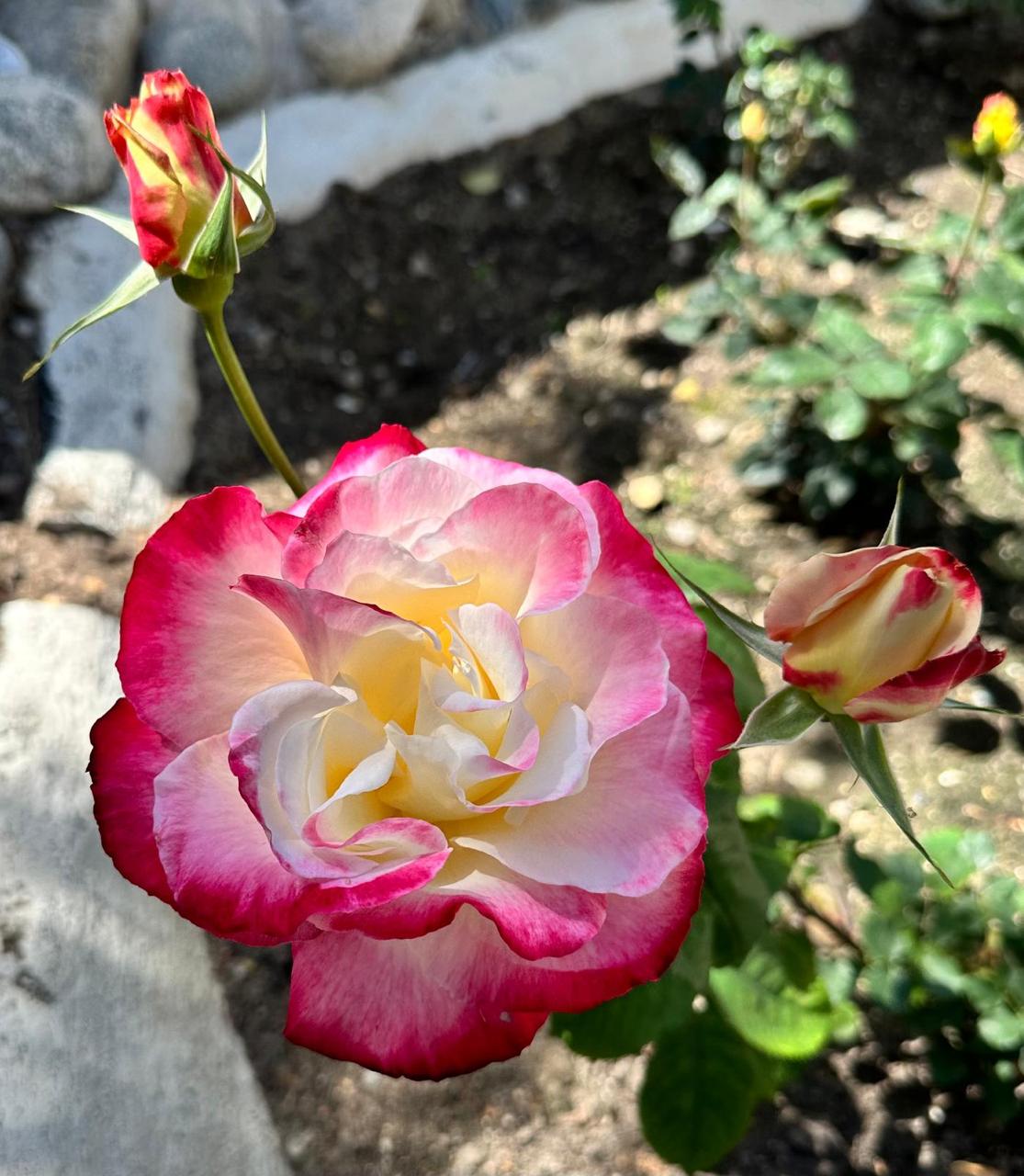
Both roses and human life at getting older remind us that every phase has its own beauty and worth. While roses eventually fade, the seeds and memories they leave behind continue their legacy — a metaphor for the ongoing impact of one’s life and actions, even as we age.
Women *Represent 70% Of the Global Health Workforce
In these stressful days the novel coronavirus seems to hit female health care workers harder than others who contract the disease. No wonder since right now, where workers are on the front lines of patient interactions, women in health-care jobs make up more than 70% of the global workforce.
As these women making up the majority of health-care workers globally, women are overwhelmingly also the primary caretakers in their families. This means that many women in health care are balancing a demanding work life and home life at the same time.
This emphasizes that these women health-care professions also have responsibility to take care of parents, who are older, and school-aged children, so no wondering their lives are enormously impacted by worrying about elderly relatives and by school closures.
Let’s think about following, it are people who go into health care, whether they’re nurses or physicians, they do it because they want to help people. So, who takes care if the caretaker, while people normally run away from tragedy, these are the folks that run toward it, and we just need to support them and keep them safe!
We can’t emphasize enough that attention must be paid to ensuring safe conditions for ALL caregivers, special attention is needed for female health-care professions —not only in access to personal protective equipment essential to ensuring they are able to function well.
Let’s start to pay attention to what is happening in peoples’’ homes and support an equal sharing of the burden of care between women and men. There is a great opportunity to “un stereotype” the gender roles that play out in households in many parts of the world. Men can (should) take a role to assist with the daily household tasks. Let’s start now to tribute to our shared humanity, making a difference to implement actions that build a more equal world!
Important observation what needs immediate attention! Across the globe, medical professionals have said that they do not have enough access to personal protective gear and equipment, and access to more may be difficult to ensure. This very concerning for the livelihood of our caretakers and their families.
Colorful Earth globe with light, closeup. Elements of this image furnished by NASA
The paradox of our time in history is that we have taller buildings but shorter tempers, wider Freeways, but narrower viewpoints. We spend more, but have less, we buy more, but enjoy less. We have bigger houses and smaller families, more conveniences, but less time. We have more degrees but less sense, more knowledge, but less judgment, more experts, yet more problems, more medicine, but less wellness.
We drink too much, smoke too much, spend too recklessly, laugh too little, drive too fast, get too angry, stay up too late, get up too tired, read too little, watch TV too much, and pray too seldom.
We have multiplied our possessions, but reduced our values. We talk too much, love too seldom, and hate too often.
We’ve learned how to make a living, but not a life. We’ve added years to life not life to years. We’ve been all the way to the moon and back, but have trouble crossing the street to meet a new neighbor. We conquered outer space but not inner space. We’ve done larger things, but not better things.
We’ve cleaned up the air, but polluted the soul. We’ve conquered the atom, but not our prejudice. We write more, but learn less. We plan more, but accomplish less. We’ve learned to rush, but not to wait. We build more computers to hold more information, to produce more copies than ever, but we communicate less and less.
These are the times of fast foods and slow digestion, big men and small character, steep profits and shallow relationships. These are the days of two incomes but more divorce, fancier houses, but broken homes. These are days of quick trips, disposable diapers, throwaway morality, one night stands, overweight bodies, and pills that do everything from cheer, to quiet, to kill. It is a time when there is much in the showroom window and nothing in the stockroom. A time when technology can bring this letter to you, and a time when you can choose either to share this insight, or to just hit delete.
Remember to spend some time with your loved ones, because they are not going to be around forever.
Remember, say a kind word to someone who looks up to you in awe, because that little person soon will grow up and leave your side.
Remember, to give a warm hug to the one next to you, because that is the only treasure you can give with your heart and it doesn’t cost a cent.
Remember, to say, ‘I love you’ to your partner and your loved ones, but most of all mean it. A kiss and an embrace will mend hurt when it comes from deep inside of you.
Remember to hold hands and cherish the moment for someday that person will not be there again.
Give time to love, give time to speak! And give time to share the precious thoughts in your mind.
And always remember, life is not measured by the number of breaths we take, but by those moments that take our breath away.
Tell the people you love that you love them, at every opportunity
As we prepare to celebrate this holiday season with family and friends, we customarily take stock of those things in our lives for which we are grateful. As we count our blessings, we must also take note of what is happening beyond our borders.
Today, more refugees than at any other time in history have fled unimaginable violence and persecution in search of safety and a more promising future for their children. Refugees need support now more than ever. Come join us to make power, communication, and access to knowledge a reality for those that need it most. And let’s consider what we could do more for those who have nothing.
It serves us well to remember that we are a country of refugees and a nation of immigrants. There is no better time to honor the legacy of welcoming the stranger than during this time of sharing and giving. Wishing our Friends and Family a Joyous Holiday filled with Peace, Love, and Prosperity. Best Wishes for a Healthy New Year!
Dealing with Dyslexia. When I was in my early years, my cousin recognized my struggle and explained the challenges and opportunities of the disorder to me. I found my way around and dealt with it in my own way, how I read, write and absorb information, is far different, to how I relay information. Others started to see me highly intuitive – known to be “street smart.” and often “dead on” in judging personalities of others.
Today I am still struggling like uncertainty with words, punctuation, and spelling when writing. Reliance on spell-check and grammar-check. Reliance on others (assistants, spouses, significant others) for written correspondence can be even more frustrating.
Dealing with dyslexia we read better with a bigger font size. It also explains why I prefer to use for example Century Gothic some Microsoft Office Typefaces. ComicSans, Century Gothic, Verdana, Trebuchet
Richard Branson, Virgin; Paul Orfalea, Kinko’s; Ingvar Kamprad, Ikea; James Dyson, Dyson; Steve Jobs, Apple; Kevin O’Leary, Shark Thank; we’re all extremely creative people and all have one thing in common, Dyslexia (including myself). A Dyslexic sees failure as a part of the path to progress.
Dyslexics Will Rule the Future
Strengths • Creativity • Problem-Solving • Connecting Unrelated Dots / Patterns • Big Picture Thinking. Dyslexics are extraordinarily creative about maneuvering their way around problems
The most valuable lesson I learned in school was how to “hack” the system which forced me to get creative.
If I was Cat, I would happily meow Happy Birthday, and spin in your lap comfortable dreaming away. But amidst difficult times, tough situations and harsh circumstances, you are the living example that we can sail through any storm of life. Happy birthday sweetheart. I hope I can make it truly a happy day, week, month and years to come. If I was a teddy bear, I would give unconditional love hugs and millions of kisses. But even being human I feel I want to do everything to give you, with every breath the love you earn as the most precious human being on this earth. So special, so natural, so lovely and without doubt your hands as they are touching things to change in magic.
I am deep in your debt and can’t express enough gratitude for al you do and all the love you fulfill selflessly every day in our house, our live without hesitation to show your true love to reach our destination.





 As we prepare to celebrate this holiday season with family and friends, we customarily take stock of those things in our lives for which we are grateful. As we count our blessings, we must also take note of what is happening beyond our borders.
 If I was Cat, I would happily meow Happy Birthday, and spin in your lap comfortable dreaming away. But amidst difficult times, tough situations and harsh circumstances, you are the living example that we can sail through any storm of life. Happy birthday sweetheart. I hope I can make it truly a happy day, week, month and years to come. If I was a teddy bear, I would give unconditional love hugs and millions of kisses. But even being human I feel I want to do everything to give you, with every breath the love you earn as the most precious human being on this earth. So special, so natural, so lovely and without doubt your hands as they are touching things to change in magic.
 Embraceable Mind